
Chapter No. 04 · The Memoir · 14 min
The Memoir: The Fall, and the Shame of "Daddy Issues"
On the Cornell case, the reflex of blaming women, and the letter I wrote to my father while I was still protecting him. Content warning: child abuse, domestic violence, sexual assault.
Before The Fall
Before I get to The Fall, there is something I need to say first. I promise this is the long one, the one that touches everything, and not me edging you until the next chapter.
I am in another transitional season, and I keep thinking about how The Last Romantic held me together while I was coming apart at the seams. I never built it to monetize. I built it because I needed connective tissue: something to hold the passion projects, the therapy, the accountability, the community. It is where I tested every creative medium I could get my hands on, wrote love letters to cities all over the world, and manic-obsessively started an investigative journalism and biopic piece. It is where my day-to-day philosophy and my healing run on the same clock, often in real time. It is where I take the armor off in public and practice vulnerability.
This is, everything important to me.
I live in a capitalist country with a chip on my shoulder and a hamster wheel under my feet, one that somehow runs uphill and downhill at once, and I want off. On paper my career looks fine. Inside, it feels stagnant, and no critic is harder on me than I am. But I believe this: when we are in tension and in pain, we create. We go back to the craft. That is the only medicine.
It has been over a year since my first Substack post, A Letter to My Father. It has been ten months since he and I last spoke. Somewhere between launching thelastromantic.co and going deeper into the work, I deleted that letter. I want to put it back in front of you, because the news has felt like my heart being cut open: the Cornell rape case, the choreography of victim-blaming, how hard it still is for a woman to be believed, let alone to get justice.
I have mentioned this in passing before. I have been sexually abused. I buried most of it, and then I did what the culture trains girls like me to do. I audited myself. Could’ve, should’ve, would’ve. I filed myself under “damaged goods,” the way so many women with so-called Daddy Issues do, and I never noticed that the label itself was doing the abuser’s work for him. Here is the machinery, as plainly as I can state it. A father teaches his daughter what she is worth and how she should expect to be handled. The world then names the damage after her, not him. The name makes her a target. And when the next man finds her, the name is already there, waiting to explain why it was her fault.
So I am going to show you all of me: who I was when I wrote to my very first abuser, my father, and who I am now. Every time we normalize a woman’s self-abandonment, every time we applaud her for going quiet, we feed the larger injustice. And I need you to understand something before you read it. The woman who wrote that letter a year and change ago, no, the child consciousness that wrote it, is not the woman before you today. It is imperative that you understand that.
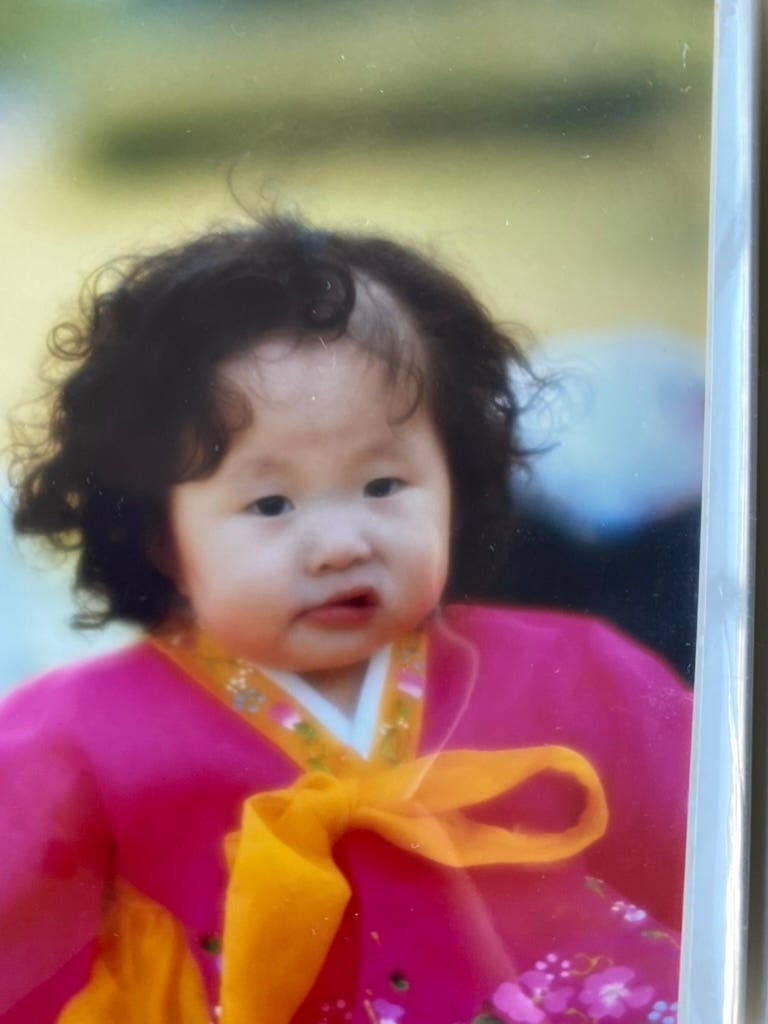
My very first Substack post, in full:
A Letter to My Father, and to Every Dad Who Still Has Time
This is not just for my dad — it’s for every father who still has the chance to cross the line of shame and meet their children where love is waiting.
Dear Dad,
It’s funny sitting with this notepad — it feels like the reason I had to learn every letter and word in my life was so I could write this to you. Maybe that sounds dramatic. Maybe it’s like the Super Bowl — neither of us cares much for it, but we both love a good American analogy.
There’s a lot of missed time between us. I wish we’d seen each other evolve. The worst thing about a broken bond, is that trust frays. Cerebrally I trust you. My heart loves you. But our nervous systems? They’re not quite settled yet. That’s okay — I think we have time, and neuroplasticity on our side.
I almost didn’t write this because I didn’t want to make you feel bad. I kept striking parts out, but I need to tell you one thing that shaped why this matters: for years I wrote a letter to Mom and promised “tomorrow” I’d send it. One day, when we barely spoke, you called and told me she was dead. I don’t want to risk “tomorrow” again. Tomorrow is not guaranteed. That’s why I’m writing this now — and why I’m writing it publicly for any dad who can’t step across the line of shame to be there for his child.
We all make mistakes. People tell me I should write a memoir. Shame has stopped me — the fear that my mistakes, made public, would freeze me in the eyes of others. Ten years ago, I wouldn’t have recognized the person I am today. Now people call me kind, considerate, thoughtful, selfless. I wasn’t those things a decade ago. You’d be proud of who I am now, and that pride isn’t “in spite of you.” It’s because of what you taught me — stubbornness, keeping my word, integrity, holding to values. I didn’t inherit perfection, but I inherited resolve.
I remember the day everything erupted and I knew my marriage was over. I paced the backyard for half an hour before calling you in defeat. I don’t know why I didn’t want to fail you — maybe because failing you felt like failing myself — but you said, simply, “That’s how it had to happen.” I filed that away and only now understand how true it was.
Living in Texas — a place I once vowed never to visit — I’ve been surprised by what I carried out of that marriage: the importance of family. I grew up fiercely independent from you and thought it strange that he saw his parents every day. In hindsight, that was a sign of incompatibility. Still, I learned something I wouldn’t have otherwise.
I don’t know how many days we have left. Death has been shadowing our family in ways I’ve hardly only read about, and it keeps me curious about where we may meet in the afterlife. But I promise: as I share my life publicly to alchemize meaning from memory, none of it should reflect badly on you. You did the best you could. I see it in the way you raise Tae. If you made the same mistakes again, I wouldn’t be so forgiving — because I love him more than you can imagine — and you knew that.
I have watched you chase big dreams inside the moral code you built for yourself. I have seen you fail and shoulder hardship again and again. I can’t lift that weight for you right now, but give me a few years and I will try. What I want you to think about is this: you never give up. I have never seen you take a rest day. Maybe it’s time for a different lens — to shift from measuring failure to defining success. What does success mean to you, Dad? I fear my heart breaks each time I hear you defeated.
We do not give up, that’s a rule.
You set goals for yourself: support your family, start a business, cook good food, be a good son. You did those things despite systems stacked against you. I have seen men crumble under loneliness and money. I have seen the small moments you create — the laughs Tae texts me about — and they mean everything.
I’ve seen more of the world than you, and I’ve been inside many homes. What I’ve learned is that home can be made of small, steady things. I’ve lost most of my life chasing my “own family”, when I had one all along. We’re just a little far right now, but that’s okay. Sometimes that works better, in largely inexplicable ways.
So here is the most important, simplest thing I want to say: the world has shamed you for existing, but I will not add to that shame — not today, not ever. I am eternally honored and grateful to be your daughter. In this life and the next, in my story, you will always be my hero. Don’t give up yet. And for once — listen to me when I ask you not to drink tonight. Let the feelings come.
Free yourself from the pain and see what’s on the other side.
Love,
Suki
What the Letter Was
Within hours of posting it, people I love reached out. I had sent it to some of them myself, and I understand now what I was actually doing. I was trying to belong. The people around me are wholesome, many of them church-going and family-first, and frankly they have carried me through this life with a love I needed desperately and never got at home. A part of me has always wanted to fit in with them. It has been, admittedly, a lonely existence, being the lone wolf at other people’s family tables.
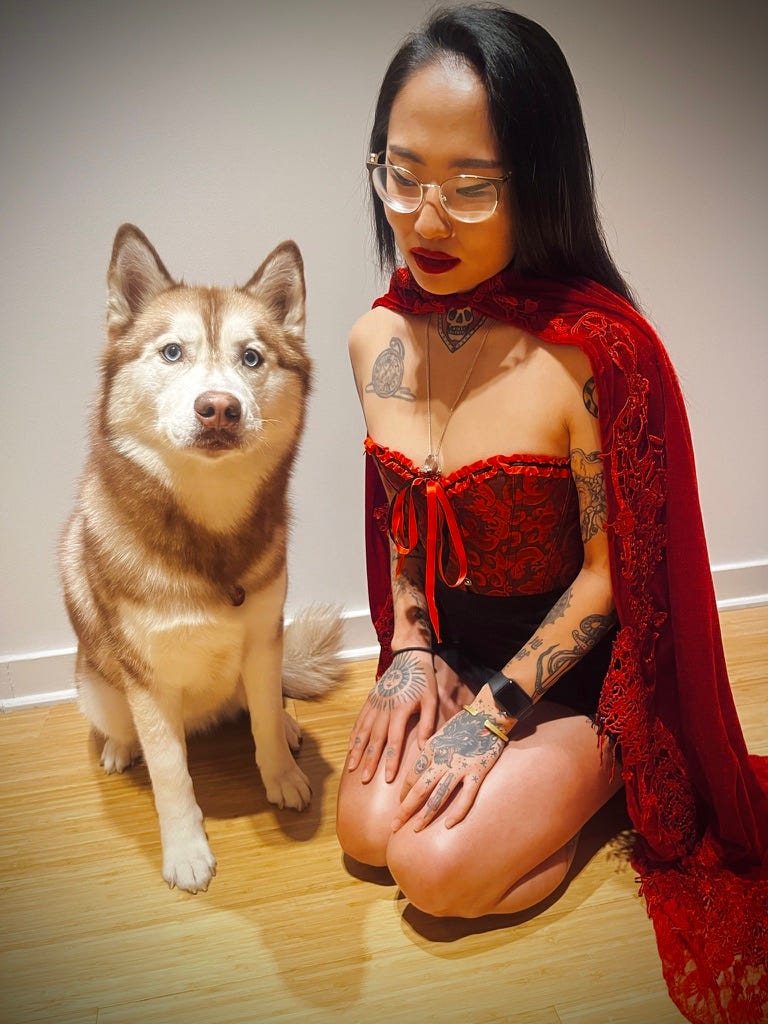
The intent was good. The impact was not. One of my mentors asked whether my father was truly “bad,” whether he had abused me at all, given how clearly I could trace the why and the how of what made him. I appreciate a mind that prods. But something cold started to open in me. Had I just written a public case for mercy on behalf of my abuser? Was this what self-abandonment looks like when it is articulate? Was this fawning?
I wince reading it now, because it is so obviously child-Suki on the page: mind-reading, pleading, saving, rescuing. It is a girl begging the man who abused her physically and emotionally, who taught her she had no worth beyond what she could produce, to please go heal his own shame so that she could keep the tatters of him. A man who could not see that his daughter was being sexually abused, by his own family, by her peers, by her partners, because seeing it would have meant looking in the mirror. That girl was begging for a piece of him, and a place in his life.
So that, she could settle for crumbs.
It is hard to describe how isolating it is to live inside that war, heart against head, every time I abandoned myself the way I was taught to. The pattern did not begin with the men I chose. It began in the apartment I grew up in.
Shame, is the most unhelpful emotion a person healing from cPTSD can carry. I carried the specific shame of Daddy Issues, with every way this culture turns it into a punchline, for a very long time. If I wrote a new letter today, it would sound nothing like that one.
There are more of us than the headlines will ever hold. I am praying for Jane Doe at Cornell, because part of me understands her exactly, and the rest of me can only imagine. It is the feeling of a woman who leaves her own body during the assault because somewhere she has already decided: it is probably best to let this happen and get it over with.
So in a dark season I have decided that women like me, lucky enough to have an audience, a path to healing, and real support, have a job. See the pattern that keeps us shackled. Say it out loud. Heal out loud, in community, instead of in isolation and shame.
Because the doctors and therapists told me, in careful clinical language, that what happened to me was horrific and not my fault, and cerebrally I agreed with them. A part of me believed them only halfway.
The other half had help. I once dated a self-described sociopath, a psychologist who specializes in treating antisocial personality disorder, and when I spiraled into shame after I was raped, he told me that yes, he thought it was partly my fault. I can only imagine how many men like him there are, planting that one seed of doubt in women all over the world. This man treats patients. For God’s sake. I believe he stalked me for a while, too. If you are reading this, Doctor: have you started looking in the mirror yet, or are you still too busy punishing women because you hate your mother?
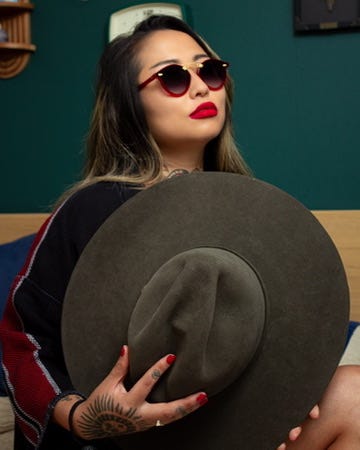
So I am done protecting my father. I am done protecting anyone who has harmed me. When I started writing, first on Instagram and then here, he went through my brother. Have empathy, the message came. He was only doing his best. And before you tell your story, think about what it could do to his reputation. Notice what I was being asked to protect. With a heavy heart, I am still estranged from my brother. There was no healthy relationship available to me while he still idolizes the man, the way I was once wrapped up in that trance.
My mentor asked whether my father was truly bad.
The Fall
I was four, maybe five, when my parents’ marriage broke. Maybe it was always broken; four is simply as far back as my memory goes.
The story I was handed is this. My father, who traveled constantly for a management job at a good company, set up a small storefront in Seoul for my mother to run. They sold American goods, Disney mostly, and my mother, a visual artist, loved having a canvas. She started an affair with my father’s business partner, who ran another store in the same plaza and had a wife and two sons of his own. My mother was ten years older than my father, with marriages and children before me. A flighty, home-wrecking woman, cursed to repeat what her own mother had done to her father. That is the tale I was told my whole life, and I am passing it to you exactly as it was passed to me.
The first memory I ever brought into EMDR is the one I call The Fall.
From the start, my mother would not nurse me. She was busy with God-knows-what, my father was busy making money, and I was left with my grandmother, who was busy with my cousins and sometimes left me with other relatives. That is where some of the abuse happened.
One day my grandmother and I were walking up to our building, a high-rise in or very near the heart of Seoul. I remember being depressed, even at four or five. I remember feeling unlike other children and not understanding why my parents were never around. She mentioned that my mother and father were both home, and I ran for the elevator.
For some reason, she cried out after me: “No! Don’t go!” But my stubby fingers had already smashed the up button and the penthouse floor, and then, naughtily, the button that closes the doors, so she could not stop me. Vain as she was and is, you would never catch my grandmother without heels. So even on my short, stubby legs, I beat her.
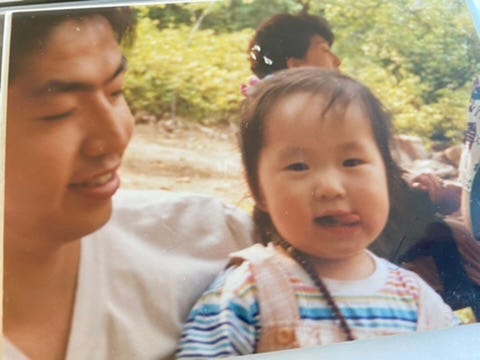
The door to our apartment opened onto the family portrait, the kind wealthy Koreans hang front and center at the entrance: my father, my mother, and me in her lap. There was a gash running vertically through it.
I heard my father screaming and my mother crying for mercy. I turned right. There he was, with a kitchen knife straight out of a Jason Voorhees movie, feathers and the remains of our beautiful home all over the floor, and my mother on her knees.
“Please. Please have mercy. Please let me live.”
When she saw me, she saw an opportunity. She pulled me in front of her, between the knife and herself, the same arrangement as the portrait.
“Don’t kill us.”
My father screamed that she had never cared about us, that he would kill us all. He raised the knife again and again, centimeters from my face. I remember dissociating completely.
The next thing I know, he had snatched me out of her arms like a rag doll and was holding me over the railing of our balcony. Way before Michael Jackson did.
I remember floating for a while. It felt like I was flying. At some point there were lights below me, police cars and fire trucks, and I started counting them. The firemen unrolled an enormous tarp. A negotiator raised a megaphone and began pleading with my father, who was determined to kill us all.
“Mr. Song, please don’t do this.”
In my letter I praised my father for never giving up. We do not give up, I wrote. That’s a rule. I had forgotten where I learned it.
Vulnerably, I cannot quite remember yet whether he dropped me onto the tarp or collapsed onto the floor before they took him out in handcuffs. This one memory took multiple EMDR sessions, and then we paused for over a year, because I needed more scaffolding and support to hold it and process it fully.
Dear Reader, thank you for listening to a part of my story.
The Memoir
The memoir is being written now.
Subscribe and chapters reach you as they’re drafted, long before the book is bound.