Essays & Letters · ·3 min read
Nugz, Sobriety, and Vulnerability
This isn’t polished—it’s me, raw and unguarded, staring into the mirror I usually hold for others.

Trauma is not just in the mind. It lingers in the body—stored in muscles, in the nervous system, in the breath we forget to take. It is the body’s refusal to rest. To live like everyone else does. Trauma separates us from others, as if we walk parallel to the world, close enough to see it, yet unable to touch it. This is why it is so isolating: even in a crowded room, the wound whispers, you are alone.

And yet the most important factor in healing is safety. Not revisiting the past, not dissecting memories, not even reading every book on trauma (though I have tried). Healing comes when the body finally believes it can let down its guard. When it feels safe enough to rest.
That is also why healing cannot happen in isolation. Bessel van der Kolk and Stephen Porges both describe how co-regulation—two nervous systems syncing—is essential to recovery. From the first moments of life, our biology is wired to find safety in others: infants calm to a heartbeat, friends steady one another simply by presence. Sometimes the way back into our own bodies is by borrowing the rhythm of someone else’s calm.
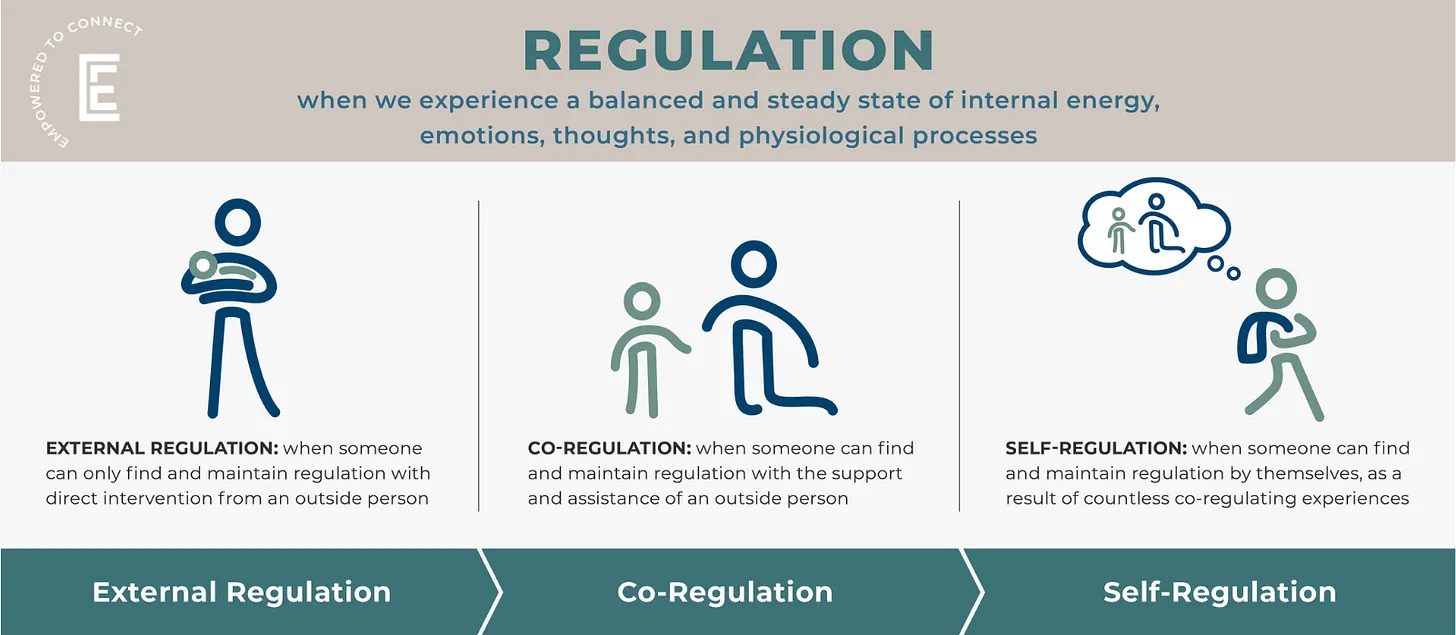
This is where Nugz enters. Nugz, this one’s for you—
I laid beside her one night (don’t get funny ideas, wrong type of writing here), the last night I drank. It took everything in me to ask if I could hold her. To ask for co-regulation.
I confessed,
“I’m not as strong as everyone thinks I am. I’m scared I’ll let down everyone I love. I’m already thinking of moving away.”
She said,
“I know you’re not. And you know we love you for you, not anything else, right? And if you fail, we have spare rooms. You’re not alone anymore. You never will be.”
I told her, “I feel so close to you right now, and at the same time my body wants to run. I told you, I’m already looking at options to move away. Maybe I’ll never talk to you again.”
She understood; she knew. She did not turn away. I left before she woke, but she has remained: consistent, safe, unwavering. And perhaps that is what healing really looks like: not in dramatic breakthroughs, but in the slow stitching of trust, one steady presence at a time.
This is my invisible battle. The fight no one sees, but I carry each day. Healing is not linear, not cinematic—it is raw, awkward, sometimes unbearably tender. It is asking for help when every cell of your body wants to retreat. It is the paradox of feeling safer in another’s arms while the nervous system trembles with the urge to escape.
And yet, within this struggle, there is a strange beauty. These small moments are the proof that nothing meant for me can miss me. That safe people will arrive, quietly, and stay.
So I will keep bleeding on paper if I must. Because beneath the bleeding is faith—that the wound is not the end of the story, but the opening. That even in the loneliness of trauma, the body can learn again the ancient language of safety.
And perhaps, one day, that language will sound like home.
This is not an invitation for superficial company. I see through it. And just as damaging as loving someone unsafe, is enduring the million paper cuts of seeking genuine connection and finding only projection and ulterior motives in return.