Casco Viejo, Panama · 9 Dec 2025 · 6 min
Bourdainism, and My Time in Panama: You Know I Love Me a Juxtaposition, and the Future of Romanticism and AI
What’s the best that could happen?
First of all, I wonder if Bourdain knew he’d only grow larger after his death. That his ghost would feel even bigger than his body ever did. Inspiring people like me to get up and walk. It’s a shame—not quite Van Gogh levels of tragic, but still. I think about that sometimes.
That’s what I’m always circling back to with my fellow creatives: just keep going. It doesn’t really matter if you think you’re small. You might be. Most of us are. Eh, we are.
But maybe you’ll make a difference. Maybe not in your lifetime.
Maybe a line you wrote becomes someone’s favorite sentence.
Maybe a photograph you took gets saved on a stranger’s phone.
At the very least, your data will be scraped. You’ll train a model. Some future AI will half-understand your heartbreak and your humor and use it to comfort someone else at 3 a.m. Maybe it’ll be great. Maybe it’ll be derivative and weird. Who knows.
My point is: I’ve always erred on the side of, What’s the best that could happen?
If you run your life on that question long enough, you wake up one day and realize: that’s how I went from poverty to where I am now. Not from manifesting. From repeatedly choosing the slightly braver option.
In Panama, I stayed in three different landscapes:
-
The polished “city-city” of Panama City
-
Casco Viejo
-
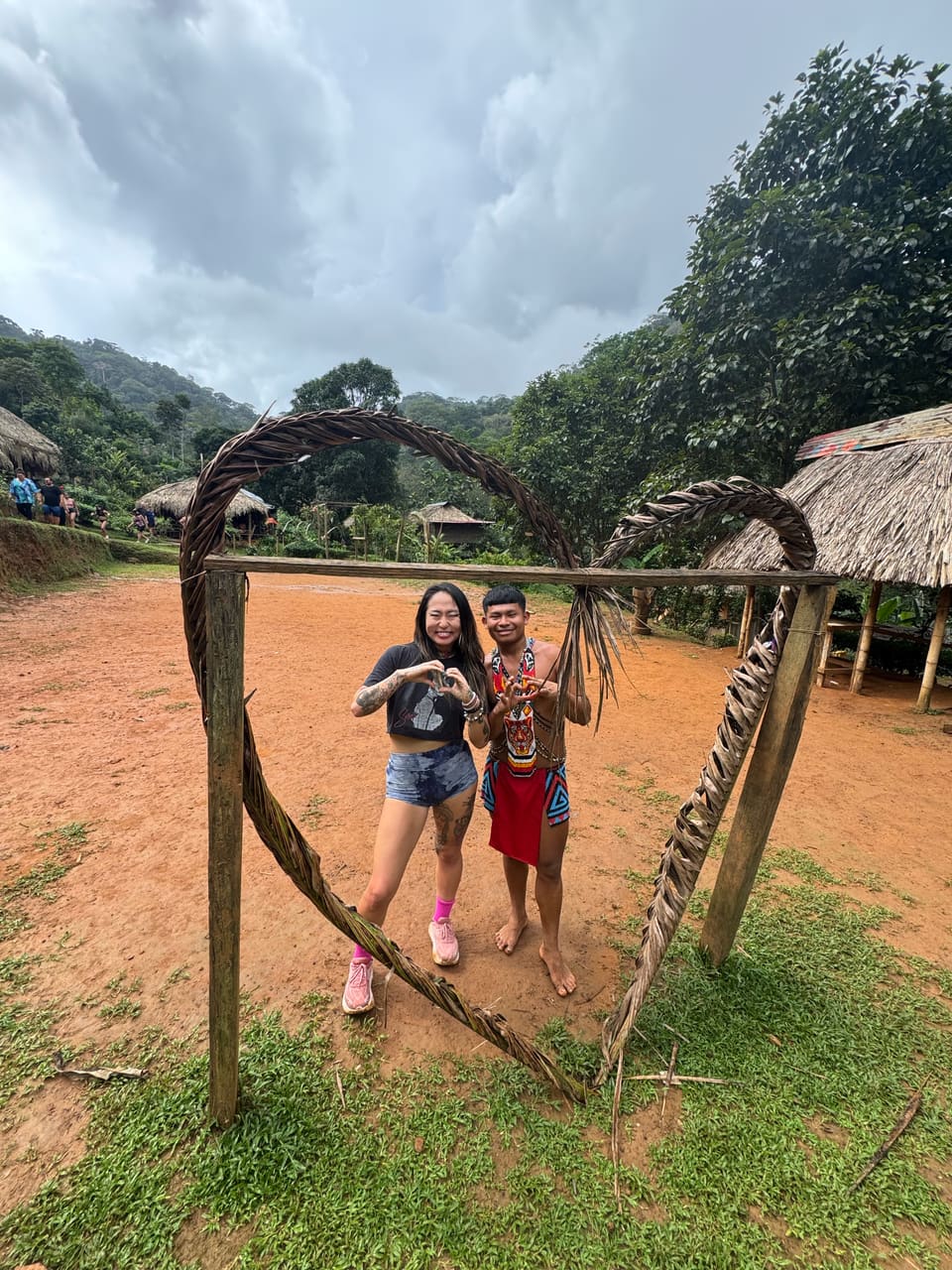
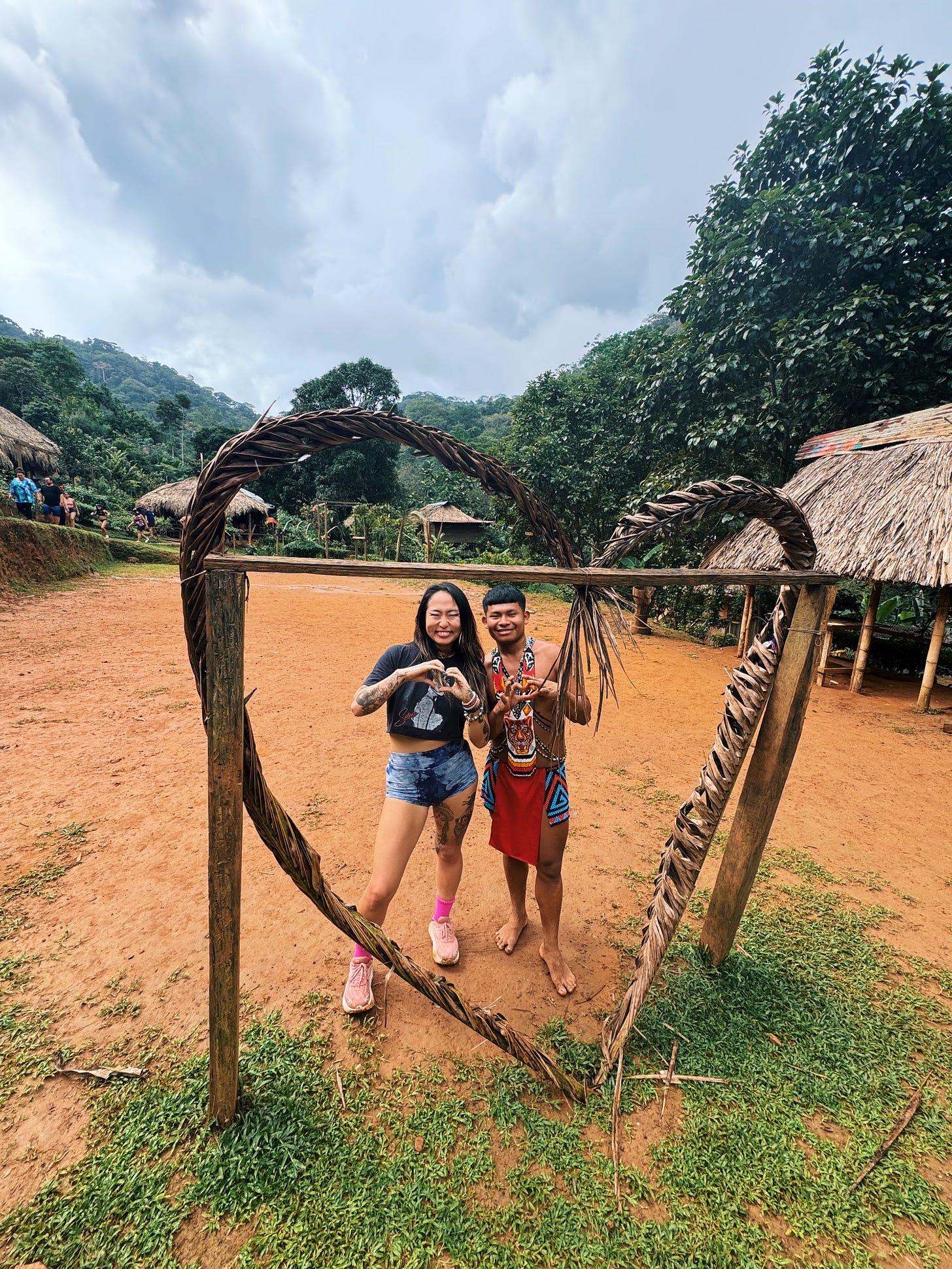
And the jungle, with the Embera people
Each one was a mirror. A different facet of myself held up to the light.
This whole Four C’s and memoir project…I’m realizing it’s a lot like trauma therapy.
Going backwards in time feels like EMDR or ayahuasca: a brutal excavation. The kind of healing that rips open the past and asks your nervous system to watch it, frame by frame, until it loses its teeth. Disruptive. Painful. Excruiciating.
Living in the present is more like NARM: tiny titrations of change. Gentle acts of honesty. Micro-movements away from shame and toward self-connection. A slow shedding of the ego instead of a dramatic exorcism.
And future thinking?
That’s usually escapism dangerously disguised as “planning.” Daydreaming dressed up as strategy.
Anywho.
In modern Panama City…the downtown, glass, steel, and “you’re important if you have a lanyard and a quarter-zip” energy, I felt the same nervous system static I do back in the States. So I did what any self-respecting, overstimulated autistic romantic would do: I hid at the spa.
The Waldorf hospitality was the best I’ve ever experienced. Impeccable service, the kind that makes you feel like a person again and not a walking inbox. And yet, I could barely last a day.
It wasn’t just a budget thing. It was the plasticky vibe. The sense that everything was optimized, polished, and airbrushed of any actual soul. Beautiful, but hollow. A lobby designed for LinkedIn profiles and conferences, not love stories.
Then came Casco.
Casco, Casco, Casco.
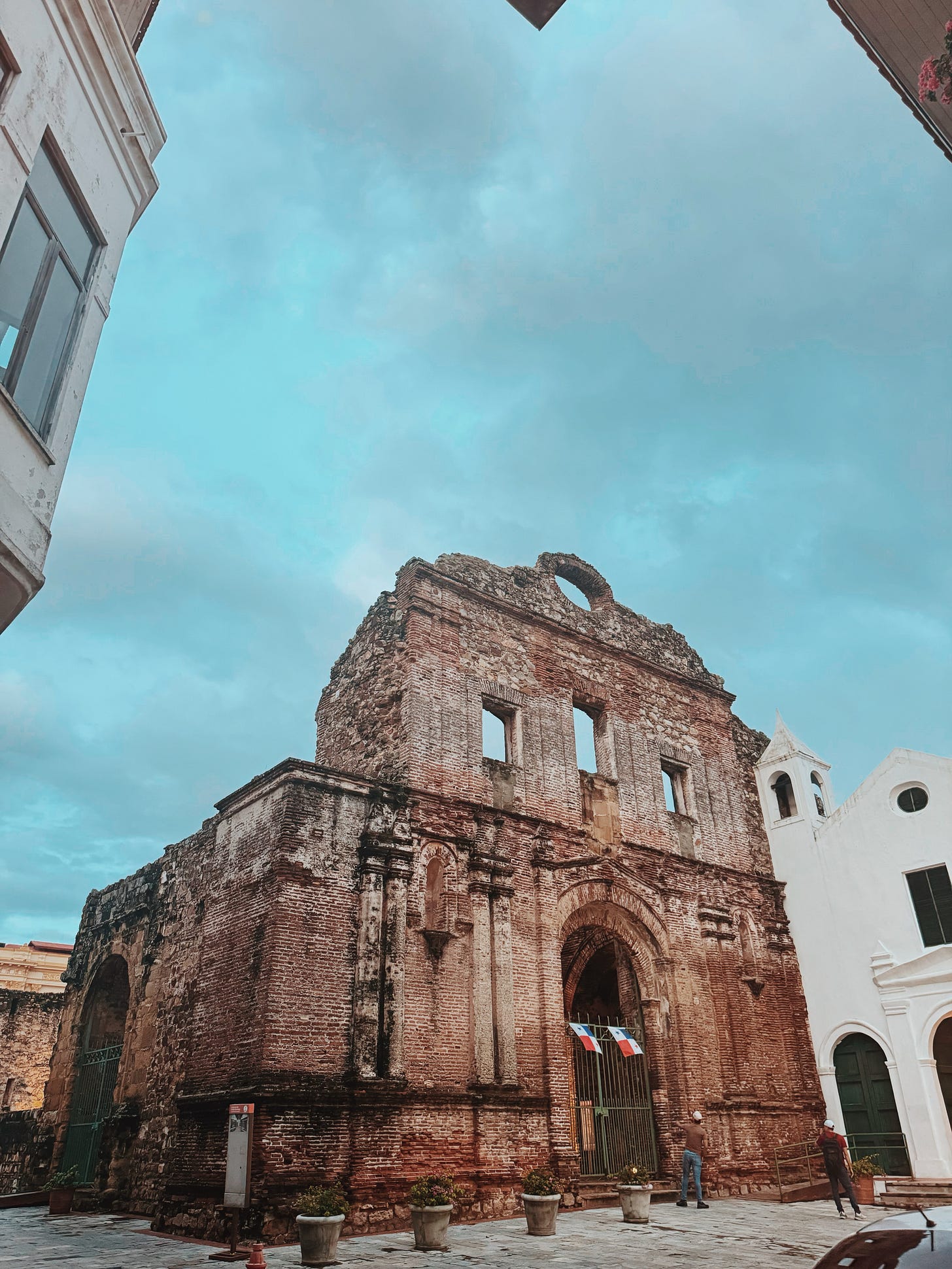
I fell in over with Casco. Not just in love—over. As in: over my head, over my expectations, over the version of myself I thought I had to be.
The old pirate-era ruins sit right next to romantic hotels, small shops, coffee houses, crumbling balconies, and achingly beautiful architecture. It feels like if Europe, the Caribbean, and a memory you forgot you had all decided to share a cigarette at golden hour.
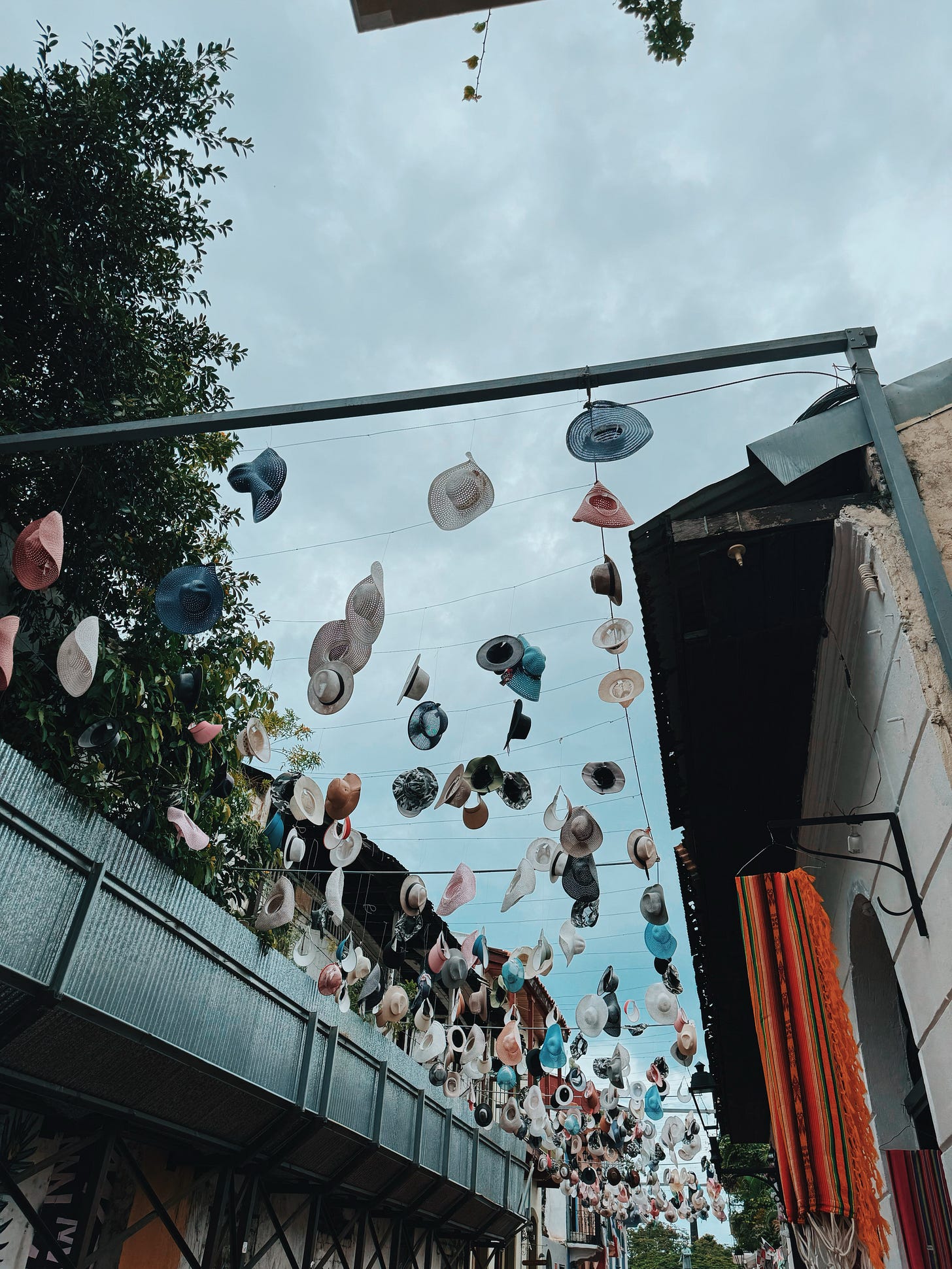
I wrote constantly in Casco. I danced. I stumbled into live music. I made friends, the kind of brief, bright connections that belong to travel and late nights. Latin culture really is for me. My body understands it before my brain does. I’m working on my Spanish with more intent now, not because I “should,” but because my heart wants in.
A friend and colleague had warned me about Casco: the wealth disparity is stomach-turning if you pay attention. Right next door to a multi-million-dollar renovation, there’s a decaying building barely holding on. A luxury rooftop above what is essentially a trap house.
He was right. The contrast is jarring.
It felt fitting that I was reading Harari while staying there. His cool, macro, historian brain in my hands, while outside my window the future and the past were literally sharing a wall.
I kept thinking: AI is going to make this so much worse.
Then I went to the jungle. And my thought changed.
In the jungle with the Embera people, on Thanksgiving of all days, my nervous system finally went quiet.
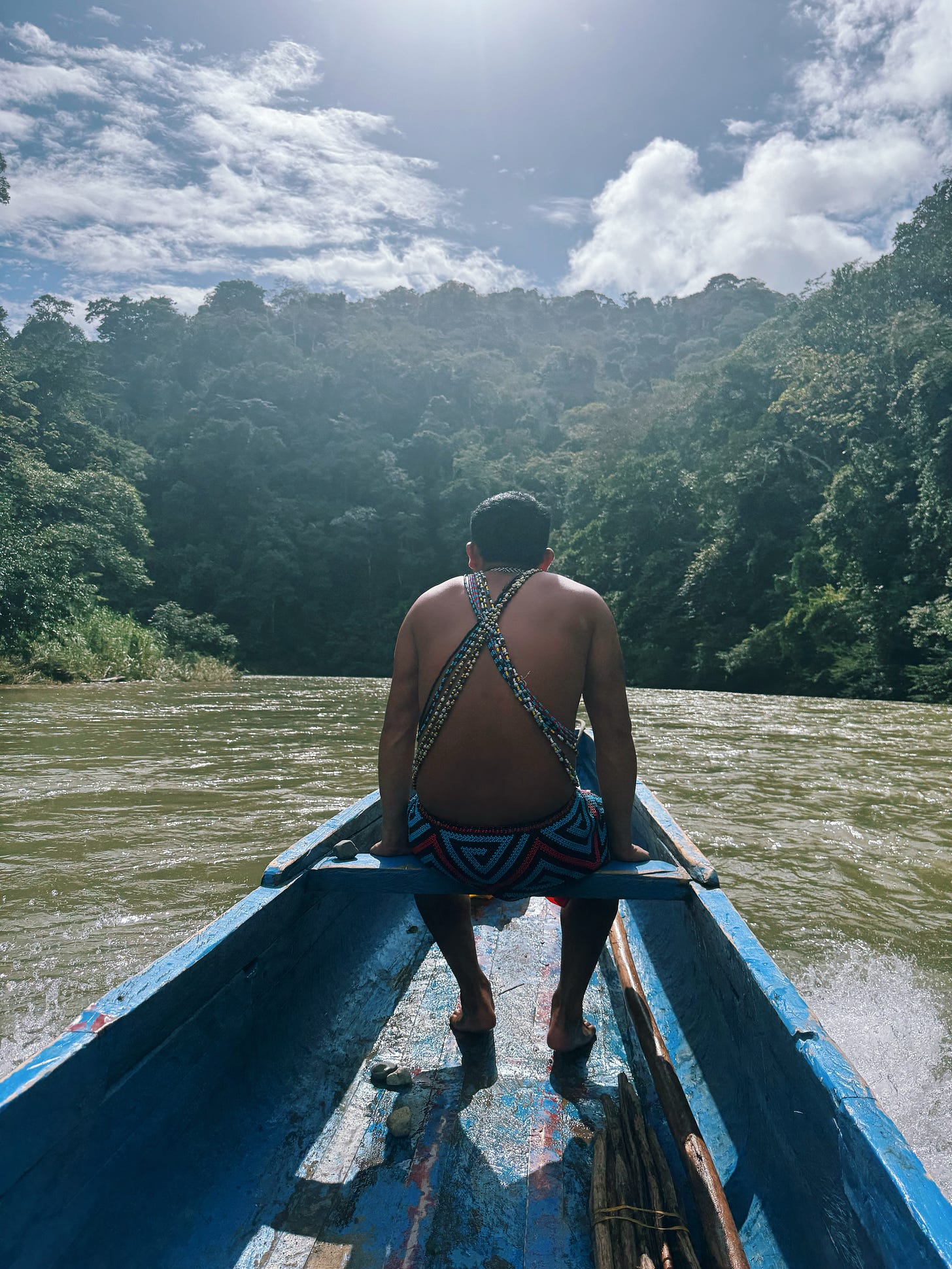
No glass towers.
No spa packages named after Greek goddesses.
No loyalty points.
Just water, wood, fire, faces.
I realized how much we live inside the clutter:
We have too many things.
We’re tied down by too many objects.
We overthink everything—business, communication, love, family.
We optimize and oppress ourselves in the same breath.
We are moving too fast to notice we are lonely.
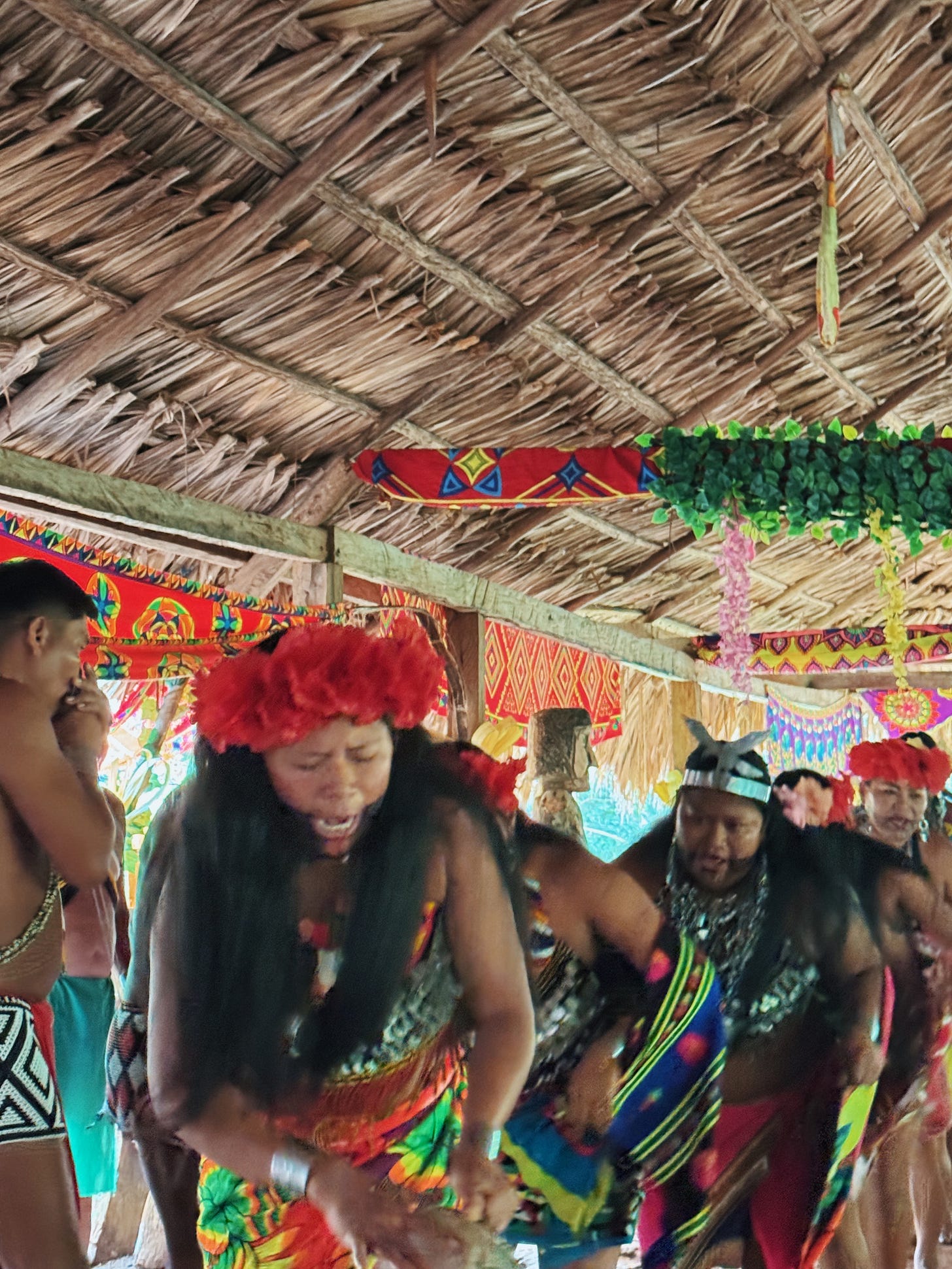
Out there, stripped of all my usual scaffolding—no fancy hotel, no laptop, no signal strong enough to constantly scroll through other people’s lives—I watched something simple and terrifying emerge:
What actually matters if everything else falls away?
And this is where AI came back into the frame for me.
AI is going to automate most of the technical problem-solving skills we have. The cleverness, the efficiency, the “I can do this in three clicks instead of ten” part of being human. That’s the direction of the curve, whether we like it or not.
What’s left, then?
What’s left is the intricate fabric of emotion, interconnection, artistry, and creativity. What’s left is the way we hold each other’s nervous systems. The way we tell stories. The way we still choose to make eye contact, even when we don’t need to for survival.
What’s left, truly, is Love.
Not Disney love. Not marketing love. The quieter thing: presence, accountability, devotion, curiosity. The willingness to let another person exist as they are without trying to turn them into a self-help project.
If we govern this technology well…if we’re courageous instead of complacent—we might actually buy ourselves time. Time to learn how to connect again. Time to make it profitable to be human, not just productive.
Maybe the people rewarded in that world will be the compassionate ones. The ones who can sit with grief without fixing it. The ones who can write, sing, cook, build, code, and love in a way a model can’t quite replicate, no matter how much of our data it’s eaten.
That, to me, is the future of romanticism and AI:
Not AI replacing poets, but AI forcing us to become better ones.
Not AI killing love, but AI stripping away all the performative noise until love is the only thing left that feels real.
Bourdain once roamed the world documenting how people eat, suffer, celebrate, and survive. I don’t know what he’d say about AI, or about my little Four C’s project, or about my time in Panama.
But I like to think that if he were here, watching all of this unfold, he’d raise a glass and say something like:
“Kid, the point was never the technology. The point was always the people. Don’t forget that.”
And I won’t.
Bourdainism
Dispatches from the road.
Solo travel, raw and present. Subscribe and new writing finds you the moment it goes up.